Solar panels have moved from being an alternative energy technology to becoming one of the most practical ways for homes and businesses to generate electricity. In Pakistan, the rapid growth of distributed solar has made understanding solar panels increasingly important for homeowners, businesses, industries, agricultural users, and investors.
But buying solar panels is not simply about choosing the panel with the highest wattage. Panel technology, efficiency, cell type, temperature performance, degradation, installation conditions, inverter compatibility, cable quality, warranties, and overall system design all affect the performance and long-term value of a solar installation.
This comprehensive guide explains what solar panels are, how they work, the different types of solar panels, how to choose the right panel in Pakistan, important specifications, installation, maintenance, pricing factors, common mistakes, and how Energy Alternatives can help you select the right solar solution.
What Are Solar Panels?
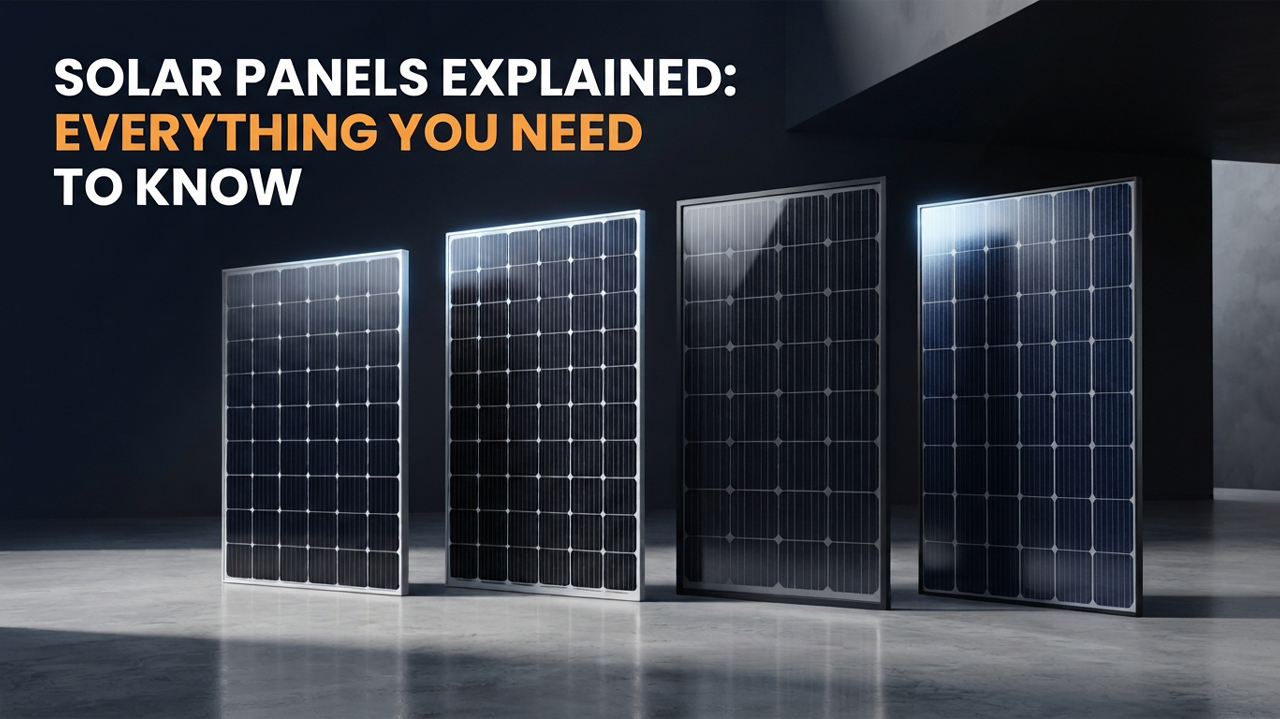
Solar panels, also called photovoltaic (PV) modules, are devices that convert sunlight into electricity.
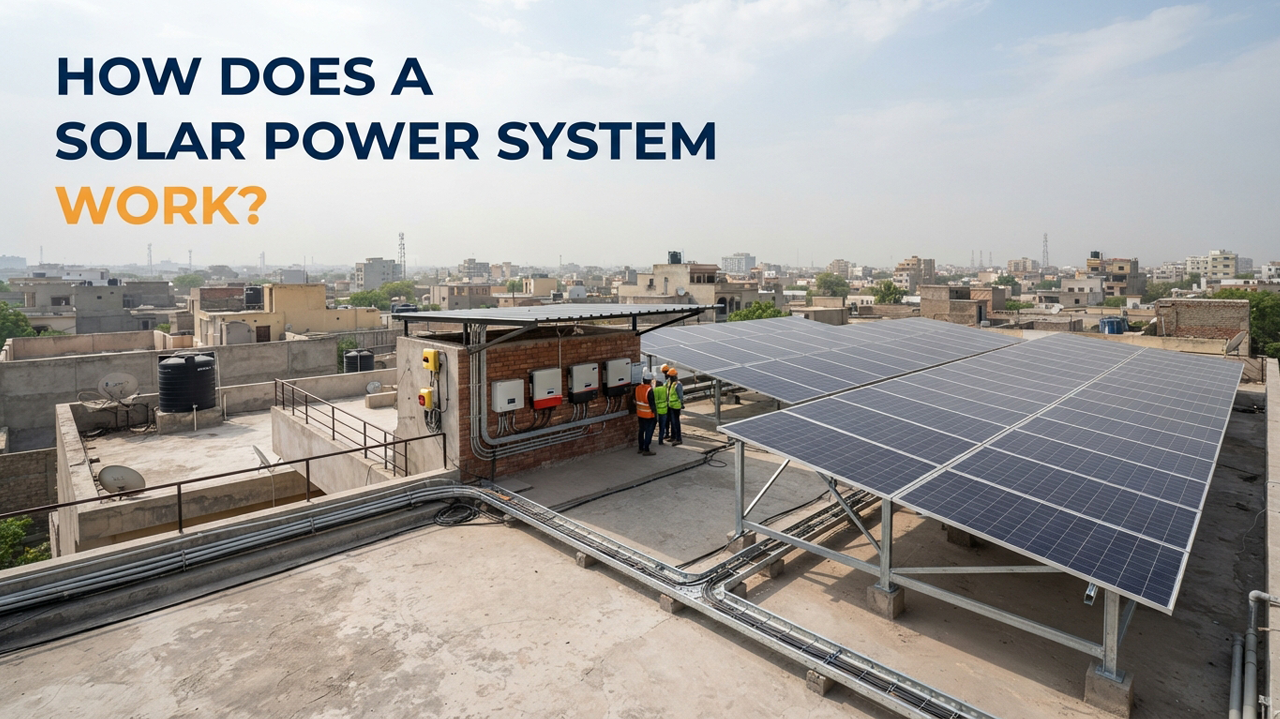
A solar panel consists of multiple interconnected solar cells. When sunlight reaches these cells, it creates an electrical current through the photovoltaic effect. The resulting electricity is normally direct current (DC), which can then be used, stored in batteries, or converted into alternating current (AC) through an inverter for use by household or commercial appliances.
The basic solar energy chain is:
Sunlight ? Solar Panel ? DC Electricity ? Inverter ? AC Electricity ? Electrical Loads
For grid-connected systems, electricity can also flow between the solar system, the building and the utility grid depending on the system configuration and applicable regulations.
The National Renewable Energy Laboratory (NREL) describes photovoltaic technology as a way of converting sunlight into electricity and notes that PV systems have applications ranging from individual modules to complete electricity-generating systems.
How Do Solar Panels Work?
The science behind a solar panel begins with sunlight.
Solar cells are generally made using semiconductor materials, most commonly silicon. When photons from sunlight strike the semiconductor, they transfer energy to electrons. This creates an electrical current.
The process can be simplified into several stages:
Sunlight reaches the panel
Solar radiation hits the surface of the photovoltaic module.
Solar cells generate DC electricity
The semiconductor cells convert sunlight into direct current.
Multiple cells work together
Individual cells are connected to create a larger electrical output. Multiple panels can then be connected into strings and arrays.
The inverter processes the electricity
For most homes and businesses, the DC electricity produced by the panels is sent to an inverter.
The inverter converts DC electricity into AC electricity suitable for conventional electrical loads.
Electricity powers the building
Solar-generated electricity can be used to operate
- Lights
- Fans
- Air conditioners
- Pumps
- Refrigerators
- Industrial machinery
- Computers
- EV chargers
- Other electrical equipment
Excess energy may be exported or stored
Depending on the system design, excess electricity may be sent to the grid or stored in batteries.
This is why solar panels should not be viewed as an isolated product. A properly designed solar system is an integrated combination of modules, inverter, mounting structure, cables, protection equipment, monitoring and, where required, energy storage.
Main Components of a Solar Panel
A modern solar module contains several layers and components designed to protect the photovoltaic cells and maintain performance over many years.
Solar Cells
Solar cells are the primary electricity-generating components.
Most commercially deployed panels use silicon-based cells.
Tempered Glass
The front glass protects the cells from:
- Rain
- Dust
- Hail
- Wind
- Physical impact
- Environmental exposure
It also allows sunlight to reach the cells.
Encapsulant
Encapsulating material surrounds the solar cells and protects them against moisture and environmental conditions.
Backsheet
The backsheet provides electrical insulation and environmental protection in panel designs that use a conventional backsheet architecture.
Some modern modules instead use glass-glass construction.
Aluminium Frame
The frame provides structural strength and allows the module to be securely mounted.
Junction Box
The junction box is located at the rear of the panel and provides electrical connections to the external solar circuit.
Bypass Diodes
Bypass diodes help reduce the impact of shading on sections of a module and protect the electrical behavior of the panel under certain operating conditions.
Types of Solar Panels
Solar panel technology has evolved considerably. Different technologies offer different combinations of efficiency, cost, durability and performance.
Monocrystalline Solar Panels
Monocrystalline panels are made using monocrystalline silicon.
They are widely used because they generally provide high efficiency and good power output per unit of area.
Advantages
- High efficiency
- Good space utilization
- Suitable for rooftops
- Strong performance in modern high-power formats
- Widely available
They are particularly attractive when roof space is limited.
Polycrystalline Solar Panels
Polycrystalline panels use silicon formed from multiple crystal structures.
Historically, they were popular because of their cost advantages, although modern market demand has increasingly shifted toward higher-efficiency technologies.
Advantages
- Established technology
- Competitive cost historically
- Suitable for larger available areas
For new installations, however, buyers should compare the complete module specifications rather than choosing solely based on the cell technology name.
N-Type Solar Panels
N-type technologies have become increasingly important in modern PV manufacturing.
Common technologies include:
- TOPCon
- HJT
- Other advanced n-type architectures
N-type modules can offer high efficiency and strong long-term performance characteristics.
N-type technology is particularly relevant for customers looking for newer-generation solar panels.
TOPCon Solar Panels
TOPCon stands for Tunnel Oxide Passivated Contact.
TOPCon is a modern solar cell technology designed to improve cell efficiency and reduce electrical losses.
Modern TOPCon panels can provide:
- High efficiency
- Strong energy yield
- Improved temperature characteristics
- Good performance for residential and commercial applications
Because technology changes quickly, buyers should compare actual module specifications, warranties and manufacturer documentation rather than relying on the technology label alone.
HJT Solar Panels
HJT stands for Heterojunction Technology.
HJT combines different semiconductor structures to improve solar cell performance.
Potential advantages include:
- High efficiency
- Strong temperature performance
- Low degradation characteristics
- High energy yield
HJT can be attractive for premium solar projects where maximizing energy production is a priority.
Bifacial Solar Panels
Bifacial modules can generate electricity from light reaching both sides of the module.
They can be particularly useful when the installation environment provides sufficient reflected or rear-side light.
Performance depends heavily on:
- Ground reflectivity
- Mounting height
- Row spacing
- Installation design
- Rear-side exposure
Bifacial technology is especially relevant for commercial, industrial and ground-mounted projects.
How to Read Solar Panel Specifications
One of the most important skills for a solar buyer is understanding the panel datasheet.
Here are the major specifications you should examine.
Maximum Power — Pmax
Pmax represents the panel's rated maximum power under specified test conditions.
For example:
550W, 580W, 600W or 700W
However, a higher wattage does not automatically mean a better panel.
Panel dimensions and efficiency must also be considered.
Module Efficiency
Efficiency indicates how effectively the panel converts available solar energy into electricity.
Higher efficiency generally means more power can be produced from the same roof area.
This is particularly important where installation space is limited.
Open-Circuit Voltage — Voc
Voc is the voltage measured when the electrical circuit is open.
It is important when designing panel strings and ensuring that the inverter's maximum DC voltage is not exceeded.
Short-Circuit Current — Isc
Isc represents the current under short-circuit conditions.
It is important for system design and electrical protection calculations.
Voltage at Maximum Power — Vmp
Vmp is the operating voltage at which the module produces its rated maximum power under specified test conditions.
Current at Maximum Power — Imp
Imp represents the current produced at the module's maximum power point.
Why Solar Panel Efficiency Matters
Solar panel efficiency is especially important in Pakistan because many residential and commercial customers have limited roof space.
Imagine two panels occupying approximately similar areas
Panel A: Lower efficiency
Panel B: Higher efficiency
If Panel B generates more power from approximately the same area, you may need fewer panels to achieve the same system capacity.
This can influence:
- Mounting requirements
- Roof utilization
- Installation cost
- Cable length
- Structural requirements
However, efficiency should always be evaluated alongside price, warranty, degradation, temperature characteristics, dimensions and manufacturer reliability.
NREL's photovoltaic research emphasizes improvements in cell conversion efficiency, module/system cost and reliability as important areas of PV development.
Do Solar Panels Work on Cloudy Days?
Yes.
Solar panels do not require direct sunlight to produce electricity. They can generate electricity from diffuse sunlight, although output generally decreases when solar irradiance is lower.
Performance can be affected by:
- Heavy cloud cover
- Dust
- Shade
- Temperature
- Panel orientation
- Atmospheric conditions
This is why actual solar production varies throughout the day and across seasons.
Do Solar Panels Work in Pakistan's Hot Weather?
Yes, but temperature is an important consideration.
Solar panel output is affected by cell temperature. As module temperature rises above the conditions used for rated testing, electrical output can decrease.
Pakistan's climate therefore makes temperature coefficient an important specification when comparing panels.
A quality solar system should consider:
- Panel temperature coefficient
- Ventilation beneath modules
- Mounting design
- Local climate
- Expected operating temperature
A good engineering design is about more than simply installing the maximum number of panels possible.
What Affects Solar Panel Performance?
Several factors influence actual solar generation.
Sunlight
Greater solar irradiance generally means higher output.
Panel Orientation
Correct orientation helps maximize sunlight exposure.
Tilt Angle
The appropriate tilt depends on the location and system objectives.
Shading
Trees, buildings, walls, antennas and other obstacles can reduce generation.
Dust
Dust accumulation can reduce the amount of sunlight reaching the cells.
Temperature
High module temperatures can reduce electrical output.
Cable Losses
Incorrectly sized or poor-quality cables can increase voltage drop and losses.
Inverter Performance
The inverter must be correctly matched with the PV array.
System Design
String configuration and MPPT design can significantly affect system performance.
Solar Panels for Homes in Pakistan
Residential solar systems have become increasingly attractive for households looking to manage electricity expenses and improve energy independence.
A home solar system can be designed according to
- Monthly electricity consumption
- Daytime consumption
- Nighttime consumption
- Available roof space
- Backup requirements
- Existing electrical infrastructure
- Budget
A professional assessment should be performed before deciding whether a home needs a particular system capacity.
For example, a household with high daytime air-conditioning consumption has different requirements from a household whose major electricity consumption occurs at night.
Solar Panels for Commercial Buildings
Commercial users can benefit significantly from solar because businesses often have substantial daytime electricity consumption.
Potential applications include:
- Offices
- Schools
- Hospitals
- Hotels
- Shopping centers
- Warehouses
- Restaurants
- Retail outlets
Solar can help businesses reduce their reliance on grid electricity while supporting long-term energy planning.
Solar Panels for Industrial Applications
Industrial facilities often have large electrical loads.
Solar PV can be integrated into:
- Manufacturing plants
- Textile factories
- Food processing facilities
- Cold storage
- Warehouses
- Industrial estates
- Agricultural processing facilities
For industrial applications, system design becomes more complex because engineers need to evaluate load profiles, transformer capacity, power quality, protection systems, roof structures and operational schedules.
Solar Panels and EV Charging
One of the most exciting applications is combining solar panels with EV charging infrastructure.
A solar-powered EV charging system can use solar electricity to support vehicle charging during periods of solar generation.
This creates an integrated clean-energy ecosystem:
Solar Panels ? Inverter ? Building / Battery ? EV Charger ? Electric Vehicle
For commercial facilities, offices, hotels, shopping malls and fleet operators, combining solar energy and EV charging can support both energy and transportation sustainability objectives.
Solar Panels and Battery Storage
Solar panels produce electricity primarily during daylight hours.
Battery storage allows excess electricity to be stored and used later.
A solar-plus-storage system can provide:
- Greater energy independence
- Backup power
- Better utilization of solar generation
- Reduced dependence on the grid during selected periods
The correct battery capacity depends on the customer's load, desired backup duration and operating strategy.
Solar Panel Degradation
Solar panels do not normally produce exactly the same output throughout their entire service life.
Their output gradually declines over time, a phenomenon known as degradation.
Modern manufacturers typically provide product and performance warranties that specify how much output is expected to remain after a certain period.
When evaluating panels, examine:
- Product warranty
- Performance warranty
- Annual degradation rate
- Manufacturer reputation
- Warranty terms
Don't judge a panel solely by its initial wattage.
How Long Do Solar Panels Last?
Quality solar modules are designed for long-term operation and commonly come with multi-decade performance warranties.
However, actual service life depends on:
- Product quality
- Installation quality
- Climate
- Environmental exposure
- Maintenance
- Mechanical conditions
A solar system should therefore be viewed as a long-term infrastructure investment rather than a short-term appliance purchase.
Solar Panel Maintenance
One advantage of solar PV is relatively low routine maintenance.
However, maintenance should not be ignored.
Recommended maintenance includes:
- Visual inspection
- Cleaning when necessary
- Checking mounting structures
- Inspecting cables
- Checking connectors
- Monitoring inverter performance
- Reviewing system production
- Inspecting for shading changes
In dusty areas, cleaning can be particularly important.
The cleaning frequency should depend on actual environmental conditions rather than following an arbitrary schedule.
Common Solar Panel Buying Mistakes
Choosing Only on Wattage
A 600W panel is not automatically better than a 550W panel.
Compare efficiency, dimensions, warranties and technology.
Ignoring Temperature Coefficient
This can be particularly important in hot climates.
Buying Based Only on Price
The cheapest module may not provide the best long-term value.
Ignoring Warranty Terms
Always understand what the product and performance warranties actually cover.
Using Poor-Quality Cables
The solar module is only one component of the system. Electrical connections and cable quality matter too.
Poor Installation
Even premium panels can perform poorly if incorrectly installed.
Ignoring Shading
A small shaded area can have a significant impact depending on system configuration.
How Much Do Solar Panels Cost in Pakistan?
Solar panel pricing in Pakistan changes frequently because the market is influenced by:
- International module prices
- Currency exchange rates
- Import costs
- Taxes and duties
- Manufacturer
- Technology
- Panel wattage
- Market supply
- Local demand
For this reason, publishing a single "fixed" solar panel price can quickly become outdated.
For example, current market listings and industry discussions in 2026 show substantial variation in prices between different panel wattages and technologies. These figures should be treated as market indications rather than guaranteed quotations.
For an accurate quotation, customers should request a current price based on the exact panel model, quantity and project requirements.
Are Solar Panels a Good Investment in Pakistan?
For many consumers and businesses, solar can be an attractive long-term energy investment.
However, the financial return depends on:
- Electricity consumption
- Electricity tariff
- Solar system size
- System cost
- Solar irradiation
- Self-consumption
- Financing cost
- Battery requirements
- Applicable grid/export rules
- Maintenance
Therefore, a professional feasibility study is much more useful than relying on a generic "solar pays back in X years" statement.
Why Professional Solar System Design Matters
Buying panels is only the beginning.
A complete system requires careful engineering.
Professional designers evaluate:
Energy consumption
How much electricity does the customer actually use?
Load profile
When is electricity consumed?
Roof space
How many panels can physically be installed?
Structural requirements
Can the roof safely support the mounting system?
Inverter selection
Which inverter architecture and capacity are appropriate?
Cable sizing
What cable size minimizes voltage drop while maintaining safety?
Protection
Which DC and AC protection devices are required?
Monitoring
How will system performance be tracked?
This engineering approach helps customers achieve better long-term performance.
Why Choose Energy Alternatives for Solar Panels?
Energy Alternatives provides renewable energy solutions designed around the customer's actual energy requirements rather than simply selling individual components.
Our solar solutions can include:
- Solar Panels
- Solar Inverters
- Solar Cables
- Mounting Structures
- Electrical Protection
- System Design
- Installation
- Monitoring
- Maintenance
- Commercial & Industrial Solar Solutions
The company also provides solutions across several renewable-energy categories, including Solar Energy, EV Charging, Solar Thermal and Biomass.
This broader expertise can be valuable when customers are looking for an integrated energy strategy rather than a single product.
Solar Panels: The Future of Energy in Pakistan
Solar PV has become an increasingly important part of the global renewable-energy landscape. IRENA's Renewable Capacity Statistics 2026 provides renewable capacity data through the end of 2025, reflecting the continued expansion of renewable generation worldwide.
Pakistan is also experiencing significant interest in distributed solar. Recent market reporting and independent analyses indicate that consumer-owned solar has expanded rapidly, although estimates vary considerably because much distributed generation is behind the meter and not fully captured by conventional grid statistics.
This makes the quality of solar equipment and professional system design increasingly important.
The future is not simply about installing more solar panels.
It is about creating smarter, more reliable and better-integrated energy systems.
Solar can work alongside:
- Battery storage
- Smart inverters
- EV chargers
- Energy management systems
- Solar thermal technologies
- Biomass energy
Together, these technologies can help businesses and households build more resilient energy systems.
Frequently Asked Questions About Solar Panels
Are solar panels worth installing in Pakistan?
For many homes and businesses, solar can provide substantial long-term energy benefits. The financial case depends on electricity consumption, tariffs, system cost, solar resource, financing and system design.
Which solar panel is best?
There is no single best panel for every project. The right choice depends on efficiency, technology, warranty, dimensions, temperature characteristics, degradation, price and project requirements.
How many solar panels do I need?
The required number depends on your target system capacity and the wattage of the selected modules.
Do solar panels work during cloudy weather?
Yes. They can still generate electricity from available sunlight, although output generally decreases when solar irradiance is lower.
Do solar panels work at night?
No. Solar panels require sunlight to generate electricity. Battery storage or grid electricity can supply energy after sunset.
How often should solar panels be cleaned?
Cleaning frequency depends on dust, pollution, rainfall and the installation environment. Monitoring system output can help determine when cleaning is necessary.
Can solar panels power air conditioners?
Yes, provided the overall solar system is correctly sized and designed for the air-conditioner's electrical characteristics and operating schedule.
Can solar panels charge electric vehicles?
Yes. Solar electricity can be integrated with EV charging systems, subject to appropriate system and charger design.
Can solar panels work with batteries?
Yes. Hybrid and off-grid systems can combine solar PV with battery storage.
Final Thoughts
Solar panels are one of the most important technologies in the transition toward cleaner and more distributed energy.
But choosing solar should not be reduced to "Which panel has the highest wattage?"
A successful solar investment requires a combination of
Quality Panels + Correct System Design + Reliable Inverter + Proper Cabling + Professional Installation + Monitoring + Long-Term Support
For homes, businesses and industrial facilities in Pakistan, the right solar solution can provide a pathway toward greater energy independence, improved cost management and a more sustainable energy future.
If you're considering solar for your home, business, factory or commercial facility, Energy Alternatives can help assess your requirements and design a solar solution around your actual energy needs.
Ready to explore solar energy? Contact Energy Alternatives for a professional solar assessment and customized solution.
Residential vs Commercial Solar Systems: Which One is Right?
Solar energy has moved from being an alternative source of electricity to becoming a practical energy solution for homes, businesses, industries and institutions around the world.
For customers in Pakistan, the decision to switch to solar often starts with a simple question:
Should I install a residential solar system or a commercial solar system?
The answer depends on much more than the size of your property. Electricity consumption, operating hours, available rooftop or land area, load requirements, budget, future expansion plans, backup requirements and the type of electrical connection all influence the right solar system design.
Although both residential and commercial solar systems use the same basic principle—converting sunlight into electricity—their engineering, scale, equipment selection, installation requirements and financial considerations can be significantly different.
Solar PV has also become increasingly competitive globally. According to the International Renewable Energy Agency (IRENA), solar PV remained one of the world's most cost-competitive sources of new electricity generation, while renewable energy capacity continued to expand rapidly.
For Pakistan, solar can be particularly attractive because it can help households and businesses reduce their dependence on grid electricity and improve long-term energy planning.
In this guide, Energy Alternatives explains the difference between residential and commercial solar systems, how each works, their advantages and limitations, and how to determine which solution is right for your property.